
MindsDB
MindsDB is an open-source AI platform that integrates machine learning capabilities directly with your existing databases. It enables developers to build, train, and deploy AI models and agents using standard SQL, simplifying complex data science workflows for real-time insights.
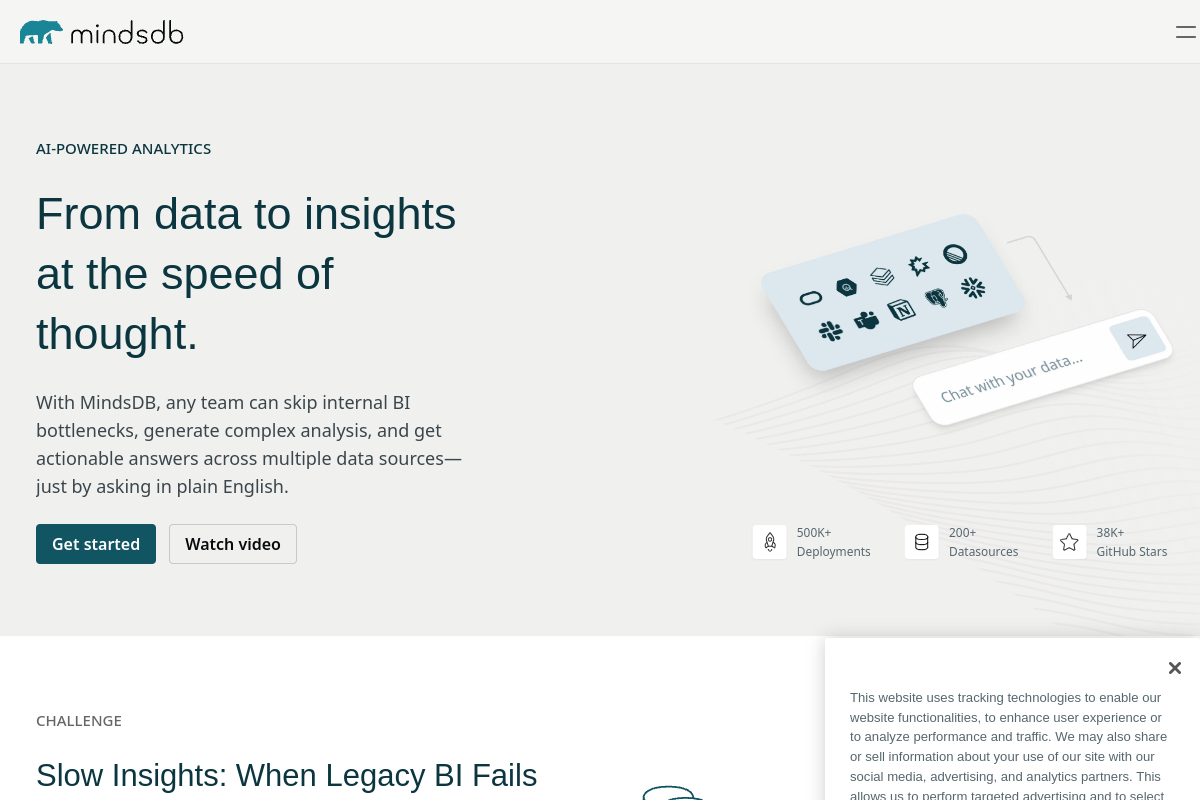
Executive Summary
MindsDB is an innovative open-source AI platform that empowers developers to build and deploy machine learning models and AI agents directly within their databases using SQL. It simplifies the process of integrating AI with existing data infrastructure, enabling real-time predictions and insights across various use cases, effectively addressing the challenge of how to integrate AI with databases for enhanced business intelligence.
Quick Facts
Ease of Use
7/10
Level
Medium
Beginner Friendly
Yes
Time to Master
Weeks for advanced use, days for basic predictions
What is MindsDB?
MindsDB is an open-source AI software platform that allows developers and data teams to build, train, and deploy machine learning models and AI agents directly on top of existing data sources using SQL. It democratizes AI by enabling real-time predictions, semantic search, and automation without complex ETL pipelines or specialized ML expertise.
By integrating directly with over 200 data sources, MindsDB eliminates data movement, empowering non-technical users to generate accurate analytics through natural language conversations. It focuses on bringing AI to where the data lives, simplifying the entire AI workflow for faster insights and decision-making.
Key Features
- SQL-based AI Model Creation: Build, train, and deploy machine learning models and AI agents using familiar SQL queries, simplifying AI development.
- Extensive Data Source Connectivity: Connects to over 200 structured and unstructured data sources, including databases and SaaS platforms, without data movement.
- Automated Machine Learning (AutoML): Automatically handles complex aspects like data preprocessing, feature selection, and model evaluation, reducing manual effort.
- Real-time Predictive Analytics: Generate instant predictions and forecasts directly within your database as new data arrives.
- AI Agents and Conversational AI: Create AI-powered agents that understand natural language, generate SQL queries, and provide transparent answers from diverse data.
- Unified Data Insights: Transforms scattered structured and unstructured data into knowledge bases for comprehensive semantic search and analytical queries.
Pricing Breakdown
| Plan | Price | Features | Verdict |
|---|---|---|---|
| Open Source | Free | Core MindsDB platform, SQL-based AI, 200+ data connectors, community support, self-hosted deployment. | Best for individual developers, data enthusiasts, and startups for prototyping and self-managed AI projects. |
| Pro | Starting at $35/user/month | Includes all Open Source features plus business-grade capabilities, suitable for smaller teams seeking a no-code/low-code solution on MindsDB Cloud. | Ideal for small to medium businesses and teams requiring managed cloud services and enhanced support for business intelligence. |
| Teams | Contact Us | Enterprise-grade features, annual subscription, deployable anywhere (on-prem, VPC, serverless), dedicated support, advanced security, and scalability for large organizations. | Recommended for large enterprises and organizations needing comprehensive AI data platform solutions with full control and dedicated resources. |
Pros
- Simplifies ML Integration: Enables AI model creation and deployment using standard SQL, making machine learning accessible to developers without deep AI expertise.
- Eliminates Data Movement: Connects directly to over 200 data sources, preventing the need for complex ETL pipelines and ensuring data remains secure.
- Real-time Insights: Facilitates real-time predictions and analytics, allowing businesses to make proactive decisions.
- Open-Source Flexibility: Offers an open-source version that can be self-hosted and customized, fostering a strong community and broad adoption.
Cons
- Advanced Customization Complexity: While simplifying core ML tasks, sophisticated customization or highly specialized AI models may demand deeper technical knowledge.
- Performance Dependency: The performance of real-time AI workflows can be limited by the slowest connected data source.
- Enterprise Security Vetting: For highly sensitive enterprise data, thorough vetting and additional security controls might be necessary due to its open-source nature and direct database access approach.
Expert Verdict
MindsDB presents a powerful and accessible solution for integrating AI and machine learning directly within database environments. Its SQL-centric approach and extensive connector ecosystem significantly lower the barrier to entry for developers and data professionals looking to build predictive models and AI agents. The ability to query structured and unstructured data in real-time without data movement is a major advantage for operational efficiency and security. While it greatly simplifies many ML complexities, leveraging its full potential for highly advanced or custom AI solutions may still require a solid understanding of data principles and some technical know-how. MindsDB is a robust choice for organizations aiming to democratize AI within their data infrastructure.
Real User Sentiment
Editor's Note
Users generally express positive sentiment towards MindsDB, particularly appreciating its ability to simplify machine learning integration with databases using SQL. Many highlight the ease of generating real-time predictions and connecting to various data sources. Some feedback indicates that advanced customization or complex edge cases might require deeper technical knowledge or present configuration challenges. Overall, the tool is seen as a valuable asset for making AI more accessible and efficient for data-driven applications.
Source: Aggregated from discussions on G2, YouTube reviews, and community forums focusing on developer and data professional feedback.
Common Feedback:
- “‘MindsDB made integrating predictive models into our PostgreSQL database surprisingly straightforward with just SQL, saving us immense development time.'”
- “‘While powerful, getting the most out of MindsDB for very bespoke AI agents required digging into the documentation and some advanced coding.'”
Best Use Cases
- Sales Forecasting Integration: Integrate MindsDB with your CRM database to predict future sales trends based on historical data, customer demographics, and market indicators. Use a SQL query to train a model and then query it for forecasts.
- Customer Sentiment Analysis Workflow: Connect MindsDB to customer feedback data (e.g., support tickets, social media feeds) to automatically analyze sentiment using an integrated LLM, enriching customer profiles in real-time.
- AI-Powered Data Agent for Business Intelligence: Deploy an AI agent that allows business users to ask natural language questions about complex, distributed enterprise data and receive accurate, context-rich answers without needing SQL expertise.
Best Examples & Prompts
Recommended Workflows & Usage Scenarios:
CREATE PREDICTOR sales_forecast FROM my_crm_db.sales_data (predict revenue USING FEATURES sales_history, marketing_spend);
CREATE ML_ENGINE openai_sentiment FROM openai; CREATE PREDICTOR customer_sentiment FROM my_customer_db.feedback_comments (predict sentiment USING ML_ENGINE openai_sentiment);
CREATE DATABASE my_agent_data WITH ENGINE = ‘mindsdb’, PARAMETERS = { ‘knowledge_bases’: [‘my_sales_kb’, ‘my_marketing_kb’] }; CREATE AGENT business_analyst_agent USING MODEL ‘openai_chat’ (datasource = ‘my_agent_data’, instructions = ‘Answer business questions based on sales and marketing data.’);
Limitations You Should Know
- Advanced Customization Complexity: While simplifying core ML tasks, sophisticated customization or highly specialized AI models may demand deeper technical knowledge.
- Performance Dependency: The performance of real-time AI workflows can be limited by the slowest connected data source.
- Enterprise Security Vetting: For highly sensitive enterprise data, thorough vetting and additional security controls might be necessary due to its open-source nature and direct database access approach.
Who is using it?
- Developers & Data Scientists: For building and deploying ML models and AI applications directly within existing database environments using SQL.
- Business Analysts: To gain real-time, AI-driven insights from disparate data sources through natural language queries, bypassing traditional BI bottlenecks.
- SaaS Providers & Enterprises: For embedding AI capabilities into products and internal workflows, enhancing customer experiences and automating data-driven processes.
Who should NOT use it?
- Non-technical Users Needing Zero-Code AI: While simplifying AI, a basic understanding of SQL or data concepts is beneficial, making it less ideal for users seeking purely drag-and-drop, no-code AI solutions without any technical input.
- Organizations Unwilling to Manage Open-Source Deployments: While there are enterprise offerings, the core is open-source, which might deter organizations preferring fully managed, proprietary, black-box AI services.
Frequently Asked Questions
How does MindsDB integrate AI with existing databases?
What are the primary use cases for MindsDB in business intelligence?
Can I build AI models with SQL using MindsDB?
Does MindsDB support real-time predictions?
What is the pricing model for MindsDB?
Free Alternatives & Details
If you’re exploring MindsDB but want to know if there’s a completely free version or better options available, you’re not alone. While MindsDB offers great features, many users look for a 100% free MindsDB alternative before committing to a paid plan. In 2026, the AI landscape has exploded with open-source tools and generous free tiers. Before you pay for a premium subscription, make sure to check out our complete directory of free AI tools to compare the best free alternatives currently on the market.