
Surfer SEO
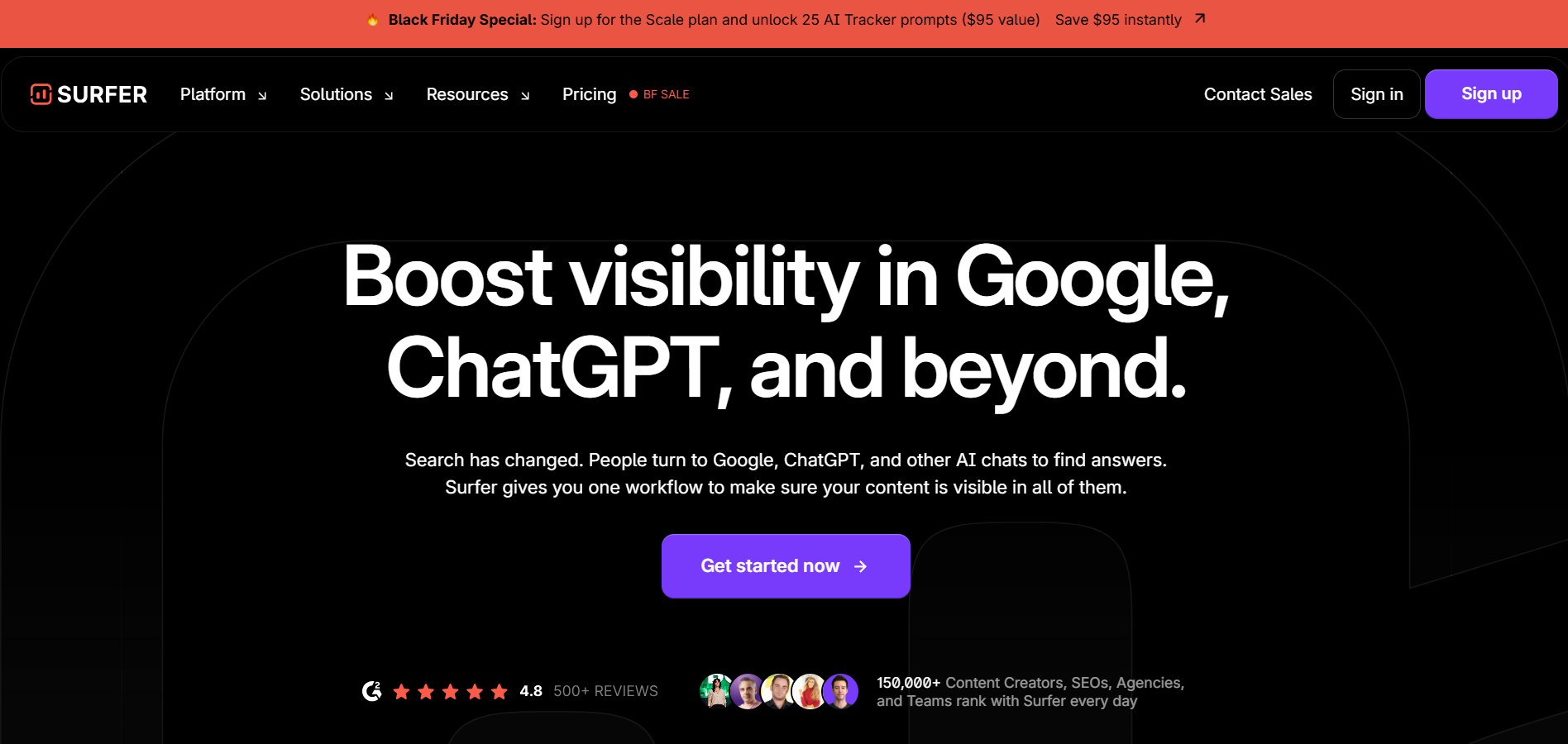
Surfer SEO is an advanced AI-driven platform designed to optimize content for higher search engine rankings. It provides data-backed recommendations and tools to streamline your on-page SEO strategy.
Executive Summary
Surfer SEO is a robust content optimization tool, offering data-driven insights and real-time guidance to enhance on-page SEO and improve search rankings. While powerful for content strategists and writers, users should be aware of its pricing structure and consider ‘Surfer SEO alternatives for content optimization’ if seeking a more comprehensive keyword research suite or budget-friendly AI content generation at scale.
Quick Facts
Ease of Use
3.5/10
Level
Medium
Beginner Friendly
Yes
Time to Master
1-2 weeks for core features
What is Surfer SEO?
Surfer SEO is a cloud-based content intelligence platform that helps users create high-ranking blog posts and articles by analyzing top-performing pages for any given keyword. It works by assessing over 500 on-page signals, including content relevance and topic coverage, to provide data-driven recommendations for improving content.
This powerful tool integrates content planning, creation, development, and optimization into a unified workflow, primarily focusing on on-page SEO to ensure content aligns with Google’s ranking algorithms. Surfer SEO aims to democratize organic traffic with user-friendly, data-backed optimization.
Key Features
- Content Editor: Provides real-time suggestions for keyword density, headings, content structure, and word count while writing or optimizing articles.
- SERP Analyzer: Analyzes top-ranking pages for a given keyword, revealing common on-page patterns, backlinks, and ranking factors influencing competitor performance.
- Content Audit: Evaluates existing content against top-ranking pages, offering specific recommendations to improve rankings for individual pages by identifying missing terms, internal linking opportunities, and structural improvements.
- Keyword Research Tool: Helps identify relevant keywords, their search volume, difficulty, and intent, and groups them into content clusters for robust content strategy.
- Topical Map: A content planning tool that visualizes a website’s topical coverage and uncovers content gaps, suggesting topic clusters you can rank for by connecting to Google Search Console.
- Surfer AI: Generates AI-powered article drafts based on target keywords, utilizing OpenAI’s GPT-4 technology, though it often requires human editing for quality.
- AI Detection & Humanizer: Processes content to identify AI-generated sections and offers tools to humanize them, ensuring originality.
Pricing Breakdown
| Plan | Price | Features | Verdict |
|---|---|---|---|
| Basic Plan | $79/month (billed annually) or $99/month (monthly) | 10 Content Editors/month, 20 Audits/month, Keyword Research, SERP Analyzer, 2 Tracked Websites, 1 Team Member. | Best for individual bloggers, freelancers, or small businesses starting with content optimization. |
| Pro Plan | $175/month (billed annually) or $219/month (monthly) | 30 Content Editors/month, 60 Audits/month, Keyword Research, SERP Analyzer, 5 Tracked Websites, 3 Team Members, AI Detection/Humanizer (up to 100,000 words/month). | Ideal for growing teams and content marketers with higher content volume and collaboration needs. |
| Business/Scale Plan | $175/month (billed annually, Scale) or $239/month (monthly, Business) or custom (Enterprise) | 70 Content Editors/month, 140 Audits/month, Keyword Research, SERP Analyzer, 10 Tracked Websites, 7 Team Members, AI Detection/Humanizer (up to 500,000 words/month), API Access. | Suited for agencies, larger businesses, and professionals requiring extensive content output and advanced features. |
Pros
- User-Friendly Interface: The dashboard is simple and easy to navigate, even for users with limited SEO experience.
- Real-Time Content Suggestions: The Content Editor provides on-the-spot recommendations for keywords, structure, and word count based on SERP data.
- Data-Backed Insights: Tools like the SERP Analyzer offer actionable breakdowns of ranking factors used by top-performing pages.
- Strong On-Page Optimization: Excels in guiding users to create content that is highly relevant and optimized for search engines.
- Integrations: Seamlessly connects with popular platforms like Google Docs and WordPress, streamlining workflows.
- AI-Assisted Writing: Surfer AI can generate initial content drafts, saving significant time for content creators.
Cons
- Cost: Surfer SEO can be pricey, especially for freelancers and small businesses with limited budgets, with additional costs for AI articles and higher usage limits.
- Limited Keyword Research Depth: While useful for an overview, its keyword research tool lacks the advanced filters and comprehensive data of specialized tools like Semrush or Ahrefs.
- Overwhelming Data: The sheer volume of data and variables presented can feel overwhelming, especially for new SEO users.
- AI Content Quality: AI-generated content often requires heavy editing to be publish-worthy and avoid high AI detection scores.
- Query Limits: Pricing plans often come with a limited number of content editor credits and audits, which can be restrictive for high-volume content producers.
Expert Verdict
Surfer SEO stands out as an exceptional tool for on-page content optimization. Its Content Editor and SERP Analyzer are industry-leading, providing actionable, data-driven insights that directly translate into improved search rankings. While its keyword research capabilities are solid, they might not be as exhaustive as dedicated keyword tools. The addition of Surfer AI is a powerful step towards content automation, but users should maintain realistic expectations regarding the need for human oversight and editing to ensure high-quality, original output. For any content strategist or SEO specialist focused on dominating SERPs through superior content, Surfer SEO is an indispensable asset.
Real User Sentiment
Editor's Note
User sentiment for Surfer SEO is overwhelmingly positive, with many praising its Content Editor and real-time optimization features for significantly improving content rankings. Some users note the tool’s cost and the learning curve as minor drawbacks, along with the need for editing AI-generated content.
Best Use Cases
- Content Creation & Optimization: Writing new articles or optimizing existing ones to rank higher by leveraging real-time SEO suggestions.
- Competitor Analysis: Analyzing top-ranking SERPs to understand on-page strategies and identify opportunities.
- Content Audits: Identifying underperforming content and getting actionable recommendations for improvement to boost existing page rankings.
- Topic Cluster Planning: Using the Topical Map to plan comprehensive content strategies and build topical authority around core keywords.
- AI-Assisted Drafting: Generating initial content outlines and drafts quickly, then refining them with Surfer’s optimization features.
Best Examples & Prompts
Limitations You Should Know
- The keyword research tool, while functional, is not as robust or granular as dedicated keyword research platforms and may require external tools for deeper analysis.
- The cost of Surfer SEO, especially with add-ons like Surfer AI and increased query limits, can become expensive for high-volume users.
- New users might find the extensive data and numerous variables initially overwhelming, requiring a learning curve to utilize all features effectively.
- AI-generated content from Surfer AI typically serves as a starting point and needs significant human editing to ensure originality and a natural tone.
Who is using it?
- Content Writers: For crafting SEO-optimized articles and blog posts with real-time feedback.
- SEO Specialists: For in-depth SERP analysis, content audits, and keyword strategy development.
- Digital Marketers: To improve content visibility, drive organic traffic, and gain a competitive edge.
- Small to Medium Businesses: To optimize website content and improve search rankings without needing an extensive SEO team.
- Agencies: For managing content optimization across multiple client projects and scaling content operations.
Who should NOT use it?
- Individuals or small businesses with very limited budgets who cannot afford the subscription and add-on costs.
- Users primarily seeking an all-in-one SEO tool for backlink analysis, technical SEO audits beyond basic checks, or comprehensive rank tracking as their main focus.
- Those who expect fully publish-ready, high-quality AI-generated content without any human editing or refinement.
- Beginners who are easily intimidated by data-rich interfaces and prefer a simpler, more streamlined approach to content writing without extensive SEO guidance.
Frequently Asked Questions
How do I use Surfer SEO for content writing?
What are the Surfer SEO pricing plans for 2025?
What are some good Surfer SEO alternatives for content optimization?
Is Surfer SEO worth it for small businesses?
What is the Surfer SEO Content Editor?
Where does Surfer SEO get its data?
Does Surfer SEO have an AI writer?
How does Surfer SEO utilize Natural Language Processing (NLP)?
Can Surfer SEO help with creating a topical authority strategy?
How accurate is Surfer SEO's Content Score in correlating with Google rankings?
Free Alternatives & Details
If you’re exploring Surfer SEO but want to know if there’s a completely free version or better options available, you’re not alone. While Surfer SEO offers great features, many users look for a 100% free Surfer SEO alternative before committing to a paid plan. In 2026, the AI landscape has exploded with open-source tools and generous free tiers. Before you pay for a premium subscription, make sure to check out our complete directory of free AI tools to compare the best free alternatives currently on the market.