
LangChain
LangChain is an open-source orchestration framework designed for developing applications using large language models (LLMs). It simplifies the process of building complex LLM-driven applications and AI agents.
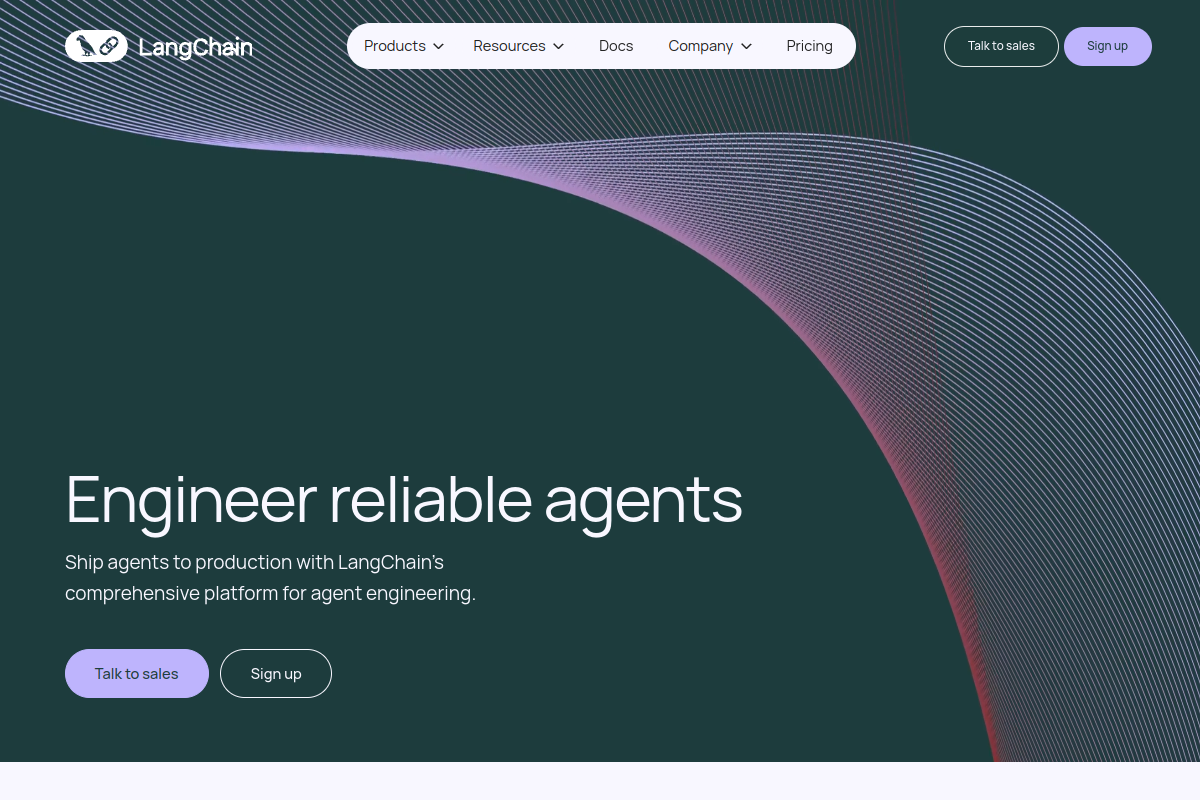
Executive Summary
LangChain is a pivotal open-source framework that revolutionizes LLM application development by providing a modular and flexible environment for building context-aware AI agents. Developers can leverage LangChain’s capabilities to streamline their workflows, and understand LangChain pricing and plans to scale their projects efficiently.
What is LangChain?
LangChain is an open-source orchestration framework for application development using large language models (LLMs), available in both Python and Javascript libraries. This powerful LLM application development framework provides tools and APIs to simplify building sophisticated LLM-driven applications, including chatbots and advanced AI agents. It acts as a prompt engineering toolkit, allowing developers to connect LLMs with external data sources and software workflows through its modular AI architecture.
Key Features
- Modular Components: LangChain features a modular design, enabling developers to easily swap components like language models, data sources, and processing steps for rapid experimentation and iteration.
- Chains: Allows developers to combine LLMs, prompts, and external tools into structured, multi-step workflows for complex tasks like summarization or question answering.
- Agents: Empowers LLMs with the ability to make decisions, use tools, and complete complex tasks step-by-step, facilitating the creation of intelligent AI agents.
- Memory Management: Simplifies retaining context across interactions, crucial for building conversational AI systems like chatbots that remember past dialogue.
- Integrations with External Data Sources: Connects LLMs to diverse data sources and external systems, drawing from a vast library of integrations for real-time data augmentation.
- LangChain Expression Language (LCEL): Provides a declarative way to define chains of actions, supporting fast and parallel execution for enhanced performance.
- LangSmith: An observability and evaluation platform for LLM applications, offering detailed tracing, monitoring, and debugging capabilities for production-ready agents.
- LangGraph: A low-level agent orchestration framework for building controllable, resilient agent workflows with customizable architecture and long-term memory.
Pros
- Accelerated Development: Significantly reduces development time by providing a modular, component-based architecture for building LLM applications quickly.
- Extensive Integrations: Offers a rich ecosystem of integrations with model providers, tools, and data sources, enabling versatile application development.
- Open-Source Flexibility: As an open-source framework, it provides transparency and allows developers to customize and extend its capabilities.
- Enhanced Agent Capabilities: Facilitates the creation of advanced AI agents with reasoning, tool-use, and memory management for complex tasks.
- Production-Ready Tooling: Integrates with LangSmith for monitoring, evaluation, and debugging, supporting the deployment of reliable applications.
Cons
- Learning Curve: While simplifying development, mastering advanced customization and agent orchestration might require some dedicated learning.
- Documentation for Advanced Use Cases: Some advanced use cases may require improved documentation for clearer implementation guidance.
Who is using it?
- AI Developers: For building and deploying complex LLM-powered applications and AI agents.
- Data Scientists: For experimenting with different foundation models and prompt engineering techniques to enhance LLM capabilities.
- Startups & Enterprises: For rapidly prototyping, developing, and scaling generative AI solutions for various use cases.
Frequently Asked Questions
How to build AI agents with LangChain?
What are the LangChain pricing and plans?
What are the key LangChain integrations for data sources?
What is the difference between LangChain and LangGraph?
Free Alternatives & Details
If you’re exploring LangChain but want to know if there’s a completely free version or better options available, you’re not alone. While LangChain offers great features, many users look for a 100% free LangChain alternative before committing to a paid plan. In 2026, the AI landscape has exploded with open-source tools and generous free tiers. Before you pay for a premium subscription, make sure to check out our complete directory of free AI tools to compare the best free alternatives currently on the market.